THE SWEET LIFE OF HORSES
How your horse may be exposed to sugar levels in its diet that you didn't suspect, how this could be affecting its health, and how you can remedy it with plants and a change of diet…
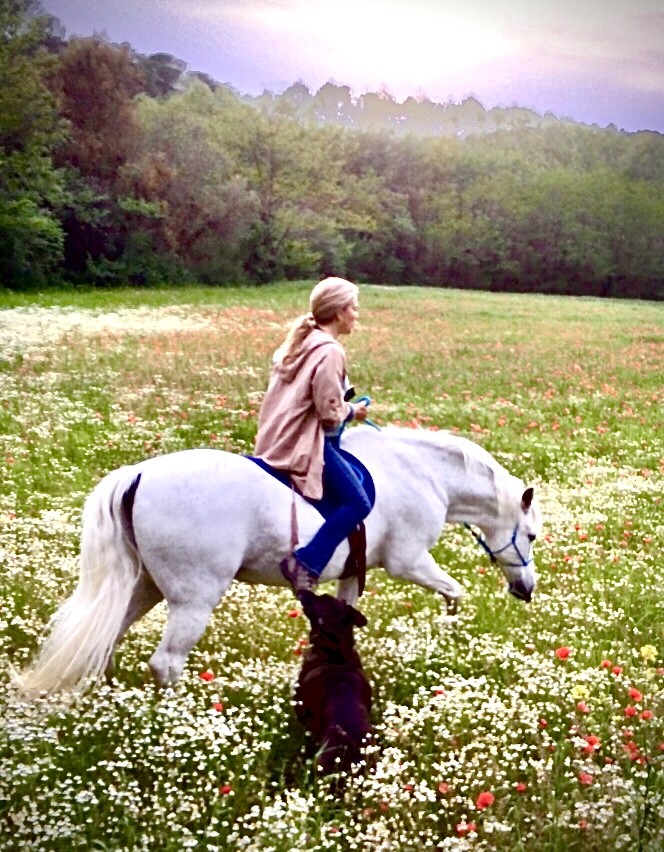
I often sit in the field to watch my horses. This is how I have learned an infinite number of things about them. How they interact, how they communicate, but above all what they eat. Fascinated with the world of plants since I began in 1997 to care for animals through my work at the Trifolium Foundation, I embarked on a journey to discover how they can help maintain health or how they can be used as medicine to treat a myriad of ailments affecting animals. Phytotherapy, the use of plants for therapeutic purposes, is my favourite subject. The same year my husband and I created a foundation for animal protection in Spain, was also the year I bought my first horse,
Tuareg. I have already mentioned him in some articles, because he is a master herbalist and has taught me the most about plants. By distancing myself from the demands of the dressage and competition world, because Tuareg soon began to show clear discontent with that whole world, I allowed myself to be guided by other skills this horse wanted to teach me.
Infinitely happier in the field and walking through the forest, this temperamental Hispano-Arab started to take an interest in various plants during our excursions through the Garraf Natural Park, our roaming area at that time. My horse's appetite for wild plants fueled my curiosity to learn more about them and soon I obtained books to identify wild plants, and the medicinal properties they possess. I then embarked on a path of research to find out what delighted Tuareg, why he opted for some and not others, or why in some seasons he was interested in one in particular and then did not touch it for the rest of the year.
I often sit in the field to watch my horses. This is how I have learned an infinite number of things about them. How they interact, how they communicate, but above all what they eat. Fascinated with the world of plants since I began in 1997 to care for animals through my work at the Trifolium Foundation, I embarked on a journey to discover how they can help maintain health or how they can be used as medicine to treat a myriad of ailments affecting animals. Phytotherapy, the use of plants for therapeutic purposes, is my favourite subject. The same year my husband and I created a foundation for animal protection in Spain, was also the year I bought my first horse,
Tuareg. I have already mentioned him in some articles, because he is a master herbalist and has taught me the most about plants. By distancing myself from the demands of the dressage and competition world, because Tuareg soon began to show clear discontent with that whole world, I allowed myself to be guided by other skills this horse wanted to teach me.
Infinitely happier in the field and walking through the forest, this temperamental Hispano-Arab started to take an interest in various plants during our excursions through the Garraf Natural Park, our roaming area at that time. My horse's appetite for wild plants fueled my curiosity to learn more about them and soon I obtained books to identify wild plants, and the medicinal properties they possess. I then embarked on a path of research to find out what delighted Tuareg, why he opted for some and not others, or why in some seasons he was interested in one in particular and then did not touch it for the rest of the year.
In these observations, I have acquired much knowledge about the pharmacopeia hidden in plants, and I have been able to deduce many things about the intelligence horses possess regarding the plant world to nourish themselves with some and medicate themselves with others. In this article, I want to talk to you about those plants that have the unique ability to control blood glucose levels and how, having access to them, horses turn to these plants to balance sugar levels in their bodies to maintain homeostasis. But before we look at which plants they are and how you can offer your horses what they need to avoid a deregulation that may cause them harm in the medium or long term, let's explore why it's important to regulate blood sugar in horses and what might be happening in modern equine diets that seem to be causing an epidemic of metabolic problems in horses.
In these observations, I have acquired much knowledge about the pharmacopeia hidden in plants, and I have been able to deduce many things about the intelligence horses possess regarding the plant world to nourish themselves with some and medicate themselves with others. In this article, I want to talk to you about those plants that have the unique ability to control blood glucose levels and how, having access to them, horses turn to these plants to balance sugar levels in their bodies to maintain homeostasis. But before we look at which plants they are and how you can offer your horses what they need to avoid a deregulation that may cause them harm in the medium or long term, let's explore why it's important to regulate blood sugar in horses and what might be happening in modern equine diets that seem to be causing an epidemic of metabolic problems in horses.
THE DIGESTIVE SYSTEM OF THE HORSE AND DIET CHANGE
I think we can agree that the horse is, taxonomically speaking, a great herbivore and should be grazing for long hours each day while roaming the plains of the steppe landscapes of this planet, which are their place of origin and where this animal evolves. Their digestive system is designed to ingest small amounts of plant material of little nutritional value continuously, which their long intestinal tract digests perfectly to extract the energy and protein a 500-kilo creature needs daily from these plants. What their small intestine does not assimilate, such as the cellulose from plants, is utilised by their microbiota in the colon. These bacteria are responsible for converting plant fiber or SC (structured carbohydrates) into fatty acids that the epithelial walls can assimilate to reach the bloodstream, from which they are distributed to the cells as a slow-release energy source (calories or fuel for cellular mitochondria).
To survive, a horse with an average bodyweight of 500 kilos in moderate movement* needs macronutrients like proteins to build tissue (hair, muscle, connective tissue, etc.), fats, and carbohydrates as energy sources to maintain movement and body temperature, and the functional activity of their organs. Minerals, vitamins, enzymes are the micronutrients that facilitate inter and intra-cellular functions, neuronal and nervous connections, and all organism activity for the heart to pump, blood to circulate, lymph to cleanse, liver to convert proteins into hormones, and so on.
As a great herbivore, the horse must be able to extract all this from the plant matter they consume daily. Their ability to adapt to the environment throughout their evolution has made them expert herbalists to reach us today. It was only approximately five thousand years ago (it is believed) that the wild ancestors of Equus ferus caballus were domesticated to perform hauling tasks and the possibility of riding them was discovered. This is the moment when humans start to alter the horse's diet so they can adapt to their new lifestyle, but it is not until just over 100 years ago during the First World War that the horse's diet is changed forever to the detriment of their health and longevity. Until then, the horse mainly fed on grass from wild meadows, forests, and some grain given in the form of cooked flakes to provide quick energy to the horse for exertion or help on long journeys where there wasn't much time for the horse to graze. During resting times, the horse had access to fresh grass or hay. In the era following the world wars, the grain-based caloric intake takes the spotlight, and the idea that the horse must graze is abandoned. Grass and hay are replaced with a higher percentage of feed based on different types of cooked and/or raw cereals mixed with plant by-products derived from the waste of the burgeoning food industry that took off in the 1950s until today. Recently, the importance of fiber for the horse and their health is being rediscovered. Therefore, at higher quality equestrian centres, hay is once again given as the main food.
At first glance, there doesn't seem to be much harm to the horse's change in diet over the last decades of this past century, but there are professionals who have spent their lives treating horses and have seen a myriad of health problems normalised that threaten the wellbeing of their patients.
Dr. Geoff Tucker is one of these professionals who has seen how the lifestyle of the modern horse has been detrimental to their health and assures that he had never seen so many colics, cases of laminitis, EMS (Equine Metabolic Syndrome), inflammatory diseases like arthritis, kissing spines and Cushing, dental issues, allergies, etc., in his more than 50 years of experience. Tucker is convinced that much of it has to do with the industrialisation of feeding and having
moved the horse away from a biologically appropriate diet for a great herbivore. According to Dr. T., the greatest of these problems is the level of hidden sugars in the horse's diet that their digestive and hormonal systems cannot properly assimilate. When it seems that horses should be better cared for than ever, and so much effort is made to have them "well," that's when we realise we've made grave mistakes, and they are becoming ill at increasingly younger ages.
THE SWEET LIFE – what to do with all that sugar?
Without realising it, by feeding your horse with feed and hay, day in and day out, you provide the animals with an amount of sugar in the form of starch, fructose, and glucose that horses cannot manage. Cereal-based feeds are full of starch, equivalent to sugars in the form of NSC (non-structural carbohydrates). When these come in through the horse's mouth, amylase starts to convert them into glucose, which will be released into the blood through the small intestine. If the feed also contains other sweet ingredients like beet pulp, molasses, and/or carob, we can add a percentage more of sugar to their diet. But besides that, we also place a bale of hay at free disposal.
THE DIGESTIVE SYSTEM OF THE HORSE AND DIET CHANGE
I think we can agree that the horse is, taxonomically speaking, a great herbivore and should be grazing for long hours each day while roaming the plains of the steppe landscapes of this planet, which are their place of origin and where this animal evolves. Their digestive system is designed to ingest small amounts of plant material of little nutritional value continuously, which their long intestinal tract digests perfectly to extract the energy and protein a 500-kilo creature needs daily from these plants. What their small intestine does not assimilate, such as the cellulose from plants, is utilised by their microbiota in the colon. These bacteria are responsible for converting plant fiber or SC (structured carbohydrates) into fatty acids that the epithelial walls can assimilate to reach the bloodstream, from which they are distributed to the cells as a slow-release energy source (calories or fuel for cellular mitochondria).
To survive, a horse with an average bodyweight of 500 kilos in moderate movement* needs macronutrients like proteins to build tissue (hair, muscle, connective tissue, etc.), fats, and carbohydrates as energy sources to maintain movement and body temperature, and the functional activity of their organs. Minerals, vitamins, enzymes are the micronutrients that facilitate inter and intra-cellular functions, neuronal and nervous connections, and all organism activity for the heart to pump, blood to circulate, lymph to cleanse, liver to convert proteins into hormones, and so on.
As a great herbivore, the horse must be able to extract all this from the plant matter they consume daily. Their ability to adapt to the environment throughout their evolution has made them expert herbalists to reach us today. It was only approximately five thousand years ago (it is believed) that the wild ancestors of Equus ferus caballus were domesticated to perform hauling tasks and the possibility of riding them was discovered. This is the moment when humans start to alter the horse's diet so they can adapt to their new lifestyle, but it is not until just over 100 years ago during the First World War that the horse's diet is changed forever to the detriment of their health and longevity. Until then, the horse mainly fed on grass from wild meadows, forests, and some grain given in the form of cooked flakes to provide quick energy to the horse for exertion or help on long journeys where there wasn't much time for the horse to graze. During resting times, the horse had access to fresh grass or hay. In the era following the world wars, the grain-based caloric intake takes the spotlight, and the idea that the horse must graze is abandoned. Grass and hay are replaced with a higher percentage of feed based on different types of cooked and/or raw cereals mixed with plant by-products derived from the waste of the burgeoning food industry that took off in the 1950s until today. Recently, the importance of fiber for the horse and their health is being rediscovered. Therefore, at higher quality equestrian centres, hay is once again given as the main food.
At first glance, there doesn't seem to be much harm to the horse's change in diet over the last decades of this past century, but there are professionals who have spent their lives treating horses and have seen a myriad of health problems normalised that threaten the wellbeing of their patients.
Dr. Geoff Tucker is one of these professionals who has seen how the lifestyle of the modern horse has been detrimental to their health and assures that he had never seen so many colics, cases of laminitis, EMS (Equine Metabolic Syndrome), inflammatory diseases like arthritis, kissing spines and Cushing, dental issues, allergies, etc., in his more than 50 years of experience. Tucker is convinced that much of it has to do with the industrialisation of feeding and having
moved the horse away from a biologically appropriate diet for a great herbivore. According to Dr. T., the greatest of these problems is the level of hidden sugars in the horse's diet that their digestive and hormonal systems cannot properly assimilate. When it seems that horses should be better cared for than ever, and so much effort is made to have them "well," that's when we realise we've made grave mistakes, and they are becoming ill at increasingly younger ages.
THE SWEET LIFE – what to do with all that sugar?
Without realising it, by feeding your horse with feed and hay, day in and day out, you provide the animals with an amount of sugar in the form of starch, fructose, and glucose that horses cannot manage. Cereal-based feeds are full of starch, equivalent to sugars in the form of NSC (non-structural carbohydrates). When these come in through the horse's mouth, amylase starts to convert them into glucose, which will be released into the blood through the small intestine. If the feed also contains other sweet ingredients like beet pulp, molasses, and/or carob, we can add a percentage more of sugar to their diet. But besides that, we also place a bale of hay at free disposal.
And that's good because the importance of fibre and the benefits for the horse of having constant access to a source of fibre have been well discussed. Essentially, this would be good, but it's not that simple. The SC (structured carbohydrates) in plants in the form of cellulose are digested in the horse's cecum and colon. We said that the horse's microbiota takes care of this. From the fermentation of these fibres, important nutrients are produced for a slow, healthy release of energy in the horse in the form of butyric acid and other essential fatty acids. But today's hay is no longer what it used to be… do you know where that hay comes from nowadays? It's not from mixed meadow grass with medicinal or hypoglycaemic plants that your horse would find in the wild, no. It's hay grown from the planting of cereals and legumes (mostly GMO) that are artificially cultivated with lots of chemistry that makes that hay grow, and a lot, without 'weeds' (meaning with a herbicide that has taken care to eliminate any plant that is not from the planted mix). That grass is usually from a mix originally designed for livestock that produces milk. Today there are no mixes strictly designed for horses. If the mix includes dactyls, alfalfa, and/or fescue, I can assure you it's a mix designed for livestock. These are very sweet varieties to produce a lot of milk. These mixes have simply been exported from livestock farming to the 'field' of horses to plant hay or pasture.
Very well, but what does this mean for your horse? Is it bad that they eat tedded grass? Initially, no, if we did it as it used to be done: meadow grass was cut, dried, and given in winter to livestock and horses. This meadow grass contained a great diversity of plants including grasses, legumes, aromatic, and therapeutic herbs. And most importantly: hypoglycaemic plants. That is, plants that reduce or regulate blood sugar. The old hay was perfect.
Some plants regulate others and a closed circle of synergies between plants emerges that benefit herbivores. But nowadays, hay comes with herbicide included so the plants with regulatory properties are no longer there. The hay is thus a sugar bomb. Moreover, we have moved from having horses grazing in meadows in spring and summer and eating meadow hay in winter, to eating hay and feed all year round. It's the only thing the horses in equestrian centres get to eat. There are now some places that plant fields with pasture made from the same mixes. The biodiversity of plants they have access to has been reduced to 5 varieties if they're lucky. Many hays are sometimes from just two varieties. Without access to hypoglycaemic plants, horses are exposed to high sugar levels in their diet without anything to help them manage it.
To this ticking time bomb, we add that many horses are confined without being able to release that sugar as an energy source, and it circulates freely in the blood. Too much sugar in the diet can cause serious metabolic problems.
To begin with, the consequent insulin resistance: the cells do not accept more sugar than they already harbour, or the pancreas fatigues and the sugar circulates without a proper companion (insulin) with respective consequences for the cardiovascular system (sugar molecules scratch the bloodstream walls). The horse essentially becomes a diabetic animal. On a hormonal level, chaos can arise between the pituitary gland (Cushing's Syndrome), adrenals (excess cortisol vs. insulin), the thyroid (swells and a slowdown of metabolisms appears) and the liver (the great hormonal laboratory and energy manager) cannot keep up to produce enough glycogen to manage fast-releasing sugars (NSC) and converts them into fats. The entire system becomes inflamed and cannot detox or perform autophagy. The organism enters a vicious circle that leads to intestinal dysbiosis and further inflammation. All these factors favour colic, allergies, and severe liver dysfunction.
Hay storage presents two factors that are not positive for the horse either. The first is the concentration of sugar in the hay we have already mentioned because of the way it is cultivated. Whether fresh or dried, grass contains high carbohydrate content in the form of SC (structured carbohydrates) and NSC (non-structured carbohydrates).
The former are found in plant structures as cellulose and secondly, simple sugars such as fructans and starches. Washing the hay or soaking it can significantly reduce soluble NSC. It would be a way to lower the risk factor of a highly artificial diet. The other negative factor in hay storage is moulds and other toxic substances (mites, pesticides, chemical fertilisers) that remain trapped in the bales. Asthma exists only in horses that live in closed spaces, or that eat from dry bales or slow feeders. As soon as they have access to the open air and eat naturally, asthma disappears. So…if feeding horses the way we have become accustomed to in the post-modern era is making them ill and we have normalised colic, laminitis, and Cushing's syndrome and SME, do we have alternatives to change this paradigm and restore horses' health through their diet?
GEMMA KNOWLES
And that's fine because the importance of fibre and the benefits of the horse having access to a constant source of fibre have been discussed. In essence, this would be fine, but it is not that simple. The SC (structured carbohydrates) of the plants in the form of cellulose are digested in the caecum and colon of the horse. We said that the horse's microbiota is responsible for this. From the fermentation of these fibres, important nutrients are produced for a healthy slow release of energy in the horse in the form of butyric acid and other essential fatty acids. But today's hay is not what it used to be... do you know where that hay comes from nowadays? It is not about the mixed meadow grass with medicinal or hypoglycaemic plants that your horse would find in the wild, no. It is hay grown from the plantation of cereals and legumes (mostly genetically modified) that are artificially cultivated with a lot of chemicals that make that hay grow, a lot, without "weeds" (that is, with a herbicide that has taken care of eliminating any plant that is not part of the planted mix). That grass is usually a mix originally designed for milk-producing cattle. There are no mixtures strictly thought out for horses today. If the mix has dactylus, alfalfa and/or fescue, I assure you it is a mix designed for cattle. They are very sweet varieties to produce a lot of milk. These mixes have simply been exported from livestock farming to the "field" of horses for planting hay or grass.
Very well, but what does this mean for your horse? Is it bad for your horse to eat hayed grass? In principle no, if we were doing it as it was done in the past: meadow grass was cut, dried and given in winter to cattle and horses. This meadow grass contained a great diversity of plants including grasses, legumes, aromatic and therapeutic herbs. And most importantly: hypoglycaemic plants. That is, plants that reduce or regulate blood sugar. The hay of the past was perfect.
Some plants regulate others and a closed circle of synergies arises between plants that benefit herbivores. But nowadays, hay carries herbicide with it so the plants with regulating properties are no longer present. The hay is therefore a sugar bomb. Furthermore, horses have gone from grazing in meadows in spring and summer and eating meadow hay in winter, to eating hay and feed all year round. It is the only thing that horses that are in equestrian centres eat. There are some places now that plant fields with grass made of the same mixes. The biodiversity of plants they have access to has been reduced to 5 varieties if they're lucky. Many hays are sometimes made of only two varieties. Without access to hypoglycaemic plants, horses are exposed to high sugar levels in their diet without anything to help them manage it.
We add to this time bomb the fact that many horses are confined and unable to release that sugar as a source of energy, and it circulates freely through the blood. Too much sugar in the diet can cause serious metabolic problems.
To start, the resulting insulin resistance: cells do not accept more sugar than they already harbour, or pancreatic fatigue and sugar circulates without an appropriate companion (insulin) with the respective consequences for the cardiovascular system (the sugar molecules scratch the walls of the blood system). The horse essentially becomes a diabetic animal. At the hormonal level, chaos can arise between the pituitary gland (Cushing's Syndrome), the adrenals (excess of cortisol vs insulin), the thyroid (which inflames and a slowdown of the metabolism appears) and the liver (the great hormonal laboratory and energy manager) cannot produce enough glycogen to manage the rapid-release sugars (NSC) and converts them into fat. The entire system inflames and cannot detoxify or conduct autophagy. The organism enters a vicious circle that leads to intestinal dysbiosis and more inflammation. All these factors favour colic, allergies and severe liver dysfunction.
The storage of hay presents two factors that are not positive for the horse either. The first is the concentration of sugar in hay that we have already mentioned because of the way it is grown. Whether it is fresh or dry, grass contains high carbohydrate content in the form of SC (structured carbohydrates) and NSC (non-structured carbohydrates).
The former are found in the structures of plants in the form of cellulose, and secondly, simple sugars such as fructans and starches. Washing hay or soaking it can lead to a significant reduction in water-soluble NSC. It would be a way to lower the risk factor of a highly artificial diet. The other negative factor of hay storage is mould and other toxic substances (mites, pesticides, chemical fertilisers) that get trapped in the bales. Asthma only exists in horses that live in enclosed spaces or that eat from dry bales or slow feeders. As soon as they have access to the fresh air and eat naturally, asthma disappears. So... if feeding horses the way we have become accustomed to in the post-modern era is making them sick and we’ve normalised colic, laminitis, and Cushing and EMS syndromes, do we have alternatives to change this paradigm and restore horses' health through their diet?
Gemma Knowles