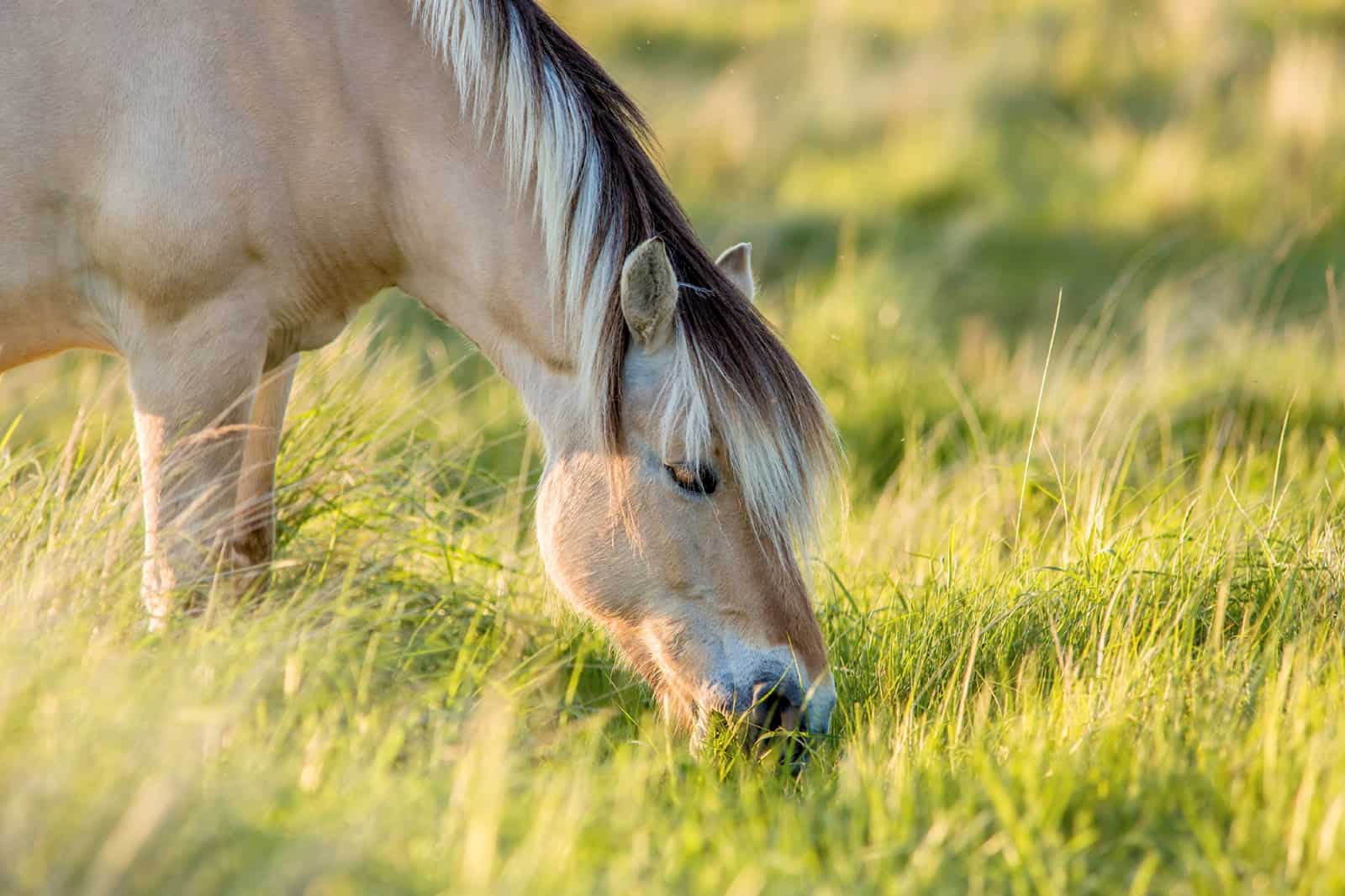
Pasture management, zoopharmacognosy, and biologically appropriate diet for horses
The very father of modern medicine, Hippocrates, said:
Let food be thy medicine, and medicine be thy food.
We have strayed far from this principle, not just for our horses; for our children, and companion animals too. We are all suffering the consequences of having left such fundamental things as our nutrition and health in the hands of industry. Rockefeller took care at the beginning of the last century to change the paradigm of medicine to base it on petrochemicals, and he created a propaganda campaign that closed many universities where future doctors of the time learned about nutrition and medicine with plants as the basis of modern medicine. Instead, he sponsored with his philanthropic banner the opening of 'avant-garde' schools and universities where chemical pharmacy and surgery were taught as the basis of a new medicine for the future. Little do today's generations know that this magnate had a focused agenda that favoured his own industry: that of oil, with all its agrochemical and petrochemical pharmaceutical machinery.
We are the generation that has inherited this legacy. And although it is debatable the spirit that motivated the richest man in history at the time, it is true that we have interesting products that have changed history. But for all this to happen to the detriment of the traditional heritage that kept us healthy, now it's up to us to rescue that lost knowledge for the benefit of our animals and our children. To return to feeding horses as nature understood for them (a biologically appropriate diet for the species) would be a good starting point. But putting the horses in wild meadows is not so easy nowadays, according to how we have created facilities for the equestrian world that are based on industrial diets.
Even so, I believe we must seriously propose to restore horses to the environment. It should not be just a fantasy but an urgent necessity if we want to rescue horses from very sad lives plagued with inflammatory diseases that cause them many discomforts and suffering. We cannot say that we are passionate about them and that they are what we love most in the world if we are not willing to give them the most fundamental for them to be well: meadows and forests.
Miquel is the veterinarian of Bellver, in the Cerdanya, and he is one of those few remaining field veterinarians who can help deliver a cow on the mountain, as well as perform ligament surgery on a domestic cat in his clinic in the village.
Miquel has a passion: the Hispano Breton horse from the Pyrenees. Miquel and I have talked a lot about plants and horses. In one of those conversations, he told me that to study veterinary medicine he went to Santiago de Compostela, it was the only university that still offered a subject few will know: practiculture. The study, maintenance, and maximisation of the yield of meadows to create permanent pasture for livestock through grazing or cultivation. Although supposedly around 7,000 years ago humans began to domesticate animals for survival, practiculture essentially is based on grazing. Today, wild meadows managed for extensive livestock have decreased to accommodate agricultural activity that mainly plants cereals. However, the management of meadows is being revalued for its ecological importance of fixing water and CO2 in which large herbivores once again play an important role in fertilising and maintaining these expanses of grasslands with all their biodiversity. So returning horses to the environment is no longer a whim of those of us who have horses, but it becomes a necessary trend to reverse climate change, desertification caused by intensive agriculture and livestock farming, and the welfare of animals that return to management with grazing.
But until we can all find places in the Spanish territory where to release our beloved horses, while many still have to keep them in confinement places with processed industrial diets, we can improve our horses' diets to reduce the high sugar levels we subject them to. Above all, reduce or eliminate cereals from their diet. Look for industrial products based on soy or pressed forage. With this, you will have greatly reduced the starch in their diet. Make sure that the label does not say cereal flours (wheat, barley, corn, rice, oats, etc). The regulations allow labelling WITHOUT CEREAL, but it may contain by-products and cereal flours. It is misleading labelling. Do not be deceived and look at the labels carefully. Many products that claim to be cereal-free are not really free. Also, watch the levels of molasses, beet pulp, or ingredients like locust bean. Discard them too. Put the hay in water to dilute NSC.
Now I want to share with you a variety of very accessible and easy-to-administer plants for your horses to help them manage the high sugar levels they can be subjected to by artificial diets.
There are two ways horses in equestrian centres can have them:
Practicing Zoopharmacognosis in their walks with you to graze after their 'work' or training around the equestrian centre so that they choose the plants that suit them. Grazing with your horse can be a very healthy and relaxing activity for both. It has been scientifically proven that forest bathing is very positive for physical and mental health.
You can make dry plant mixes that you can order from herbalists or Amazon as a hypoglycaemic remedy and add them to their feed. You can mix several of the plants I add below in equal parts in a small container, and add a handful to each feed to counteract carbohydrate levels.
My mix usually includes some aromatic like thyme or rosemary, dandelion, milk thistle, psyllium, and chamomile.
PLANTS RECOGNISED FOR THEIR HYPOGLYCAEMIC POWER
Mediterranean Hackberry (Celtis australis) - is a tree abundant in riverside areas whose leaves and fruits favour the management of sugar in the blood. The leaves have antioxidant and anti-inflammatory properties that help reduce oxidative stress highly related to insulin resistance. On the other hand, the fruits are very rich in soluble fibre that helps slow down the absorption of glucose in the intestine for better management in the blood. Horses delight in eating its leaves and fruits. It is possible to cut branches of hackberry with their fruits and put them in their resting areas to entertain them with a healthy snack.
Camomile or Chamomile (Matricaria Chamomilla) - contains flavonoids such as quercetin, and phenolic acid that act as antioxidants and anti-inflammatorys, together with sesquiterpenes and coumarin, all act synergistically to produce insulin, and regulate the spikes of hyperglycaemia that occur in grass intake. Chamomile is a well-known digestive aid that promotes liver function and regulates sugar metabolism in the intestine.
Milk Thistle (Silybum marianum) - is not a plant that directly regulates blood sugar, but it is the plant par excellence that helps liver functions. It contains Silymarin, a potent antioxidant and anti-inflammatory flavonoid that helps the liver with the management of glucose production, as well as controlling oxidative stress which can impact the resistance of cells to insulin, so indirectly it favours the cells to be more receptive to absorb sugar in the blood more effectively.
Chicory (Cichorium intybus) - contains inulin a prebiotic fibre that helps control the sugar that passes into the bloodstream.
Wild Asparagus (Aparagus acutifolius) - for containing saponins, and antioxidant flavonoids, the asparagus plant has the ability to improve the sensitivity of cells to insulin. They contain inulin and dietary fibre which slows down the absorption of carbohydrates in the intestine with the consequent positive effect.
Dandelion (Taraxacum officinale) - It is one of the best plants to control hyperglycaemia and insulin resistance. It is an abundant plant in meadows and the edges of paths to which horses can easily access. But it can also be purchased dry to make a digestive mix. It contains inulin, a prebiotic fibre that slows down the metabolism of sugar in the intestine. It has anti-inflammatory and antioxidant properties that favour the production of insulin to sequester glucose reducing its circulation in the blood. Other phytochemical compounds help cells absorb sugar, as well as regulate oxidative stress that promotes insulin resistance.
Lavender (Lavandula angustifolia) - for its antioxidant power favours the control of free radicals generated by a chronic excess of sugar in the blood, likewise the terpenoids it contains helps in the metabolism of sugar in the blood promoting the sensitivity of cells to insulin.
Lentisk (Pistacea Lentiscus) - has a resin called mastic with hypoglycaemic effects
Plantain (Plantago Ovata or Small Plantain) - this plant contains a compound known as Psyllium from its seeds. It contains a mucilaginous substance and high soluble fibre content which slows down the absorption of carbohydrates in the intestine, which regulates the passage of glucose to the blood. This prevents spikes of hyperglycaemia that can stress the pancreas. It is a plant abundant in meadows and paths across the Iberian Peninsula. It is a plant that horses really enjoy, and having access to it favours their ability to manage the sugar they ingest from grass or hay.
Mulberry leaves (Morus Alba) - Mulberry leaves contain several phytochemical compounds such as flavonoids, polyphenols that act as antioxidants like quercetin, as well as GABA that help in protecting pancreatic cells, improve insulin production, and reduce insulin resistance. They slow down the absorption of sugar in the intestine so that spikes in hyperglycemia do not occur, thus reducing oxidative damage that can be generated by excess sugar in the body.
Olive Tree (Olea europea) - the leaves and oil combat insulin resistance, are anti-inflammatory and antioxidant, hypotensive, etc.
Oregano (Origanum vulgare) - contains phytoncides that can help reduce blood sugar levels
Rosemary (Rosmarinus officinalis) - phytoncide components that reduce blood sugar levels
Thyme (Thymus vulgaris) - contains antioxidants that favour the metabolism of sugar
Sage (Salvia officinalis) - due to its anti-inflammatory and antioxidant properties from flavonoids, phenolic acids, and terpenes, like rosemary, thyme, and lavender, Sage possesses potent phytoncides that help reduce oxidative stress leading to insulin resistance. Its essential oils also possess metabolic properties that support glycemic balance.
Other plants with hypoglycaemic properties less common in meadows but can be used preventatively and therapeutically: artichoke, flax, turmeric, fenugreek, cinnamon, clove, and Aloe Vera.
I hope all this information has been useful for you to better understand how to support the health and wellbeing of your horse through nutrition and plant knowledge.
🌱 If you have any doubts or want to share your experience, we would love to read you.
HUGS!!
GEMMA KNOWLES